
Gentle ways to release the tension you've picked up during the day — no experience needed.
Try a Body ScanA body scan means slowly paying attention to each part of your body, from head to toe. You don't force anything — just notice what's there and let tight spots soften as you breathe.
It's a popular mindfulness exercise that many people use to unwind in the evening. It may help you feel more relaxed, but it's not a replacement for professional care if you need it.
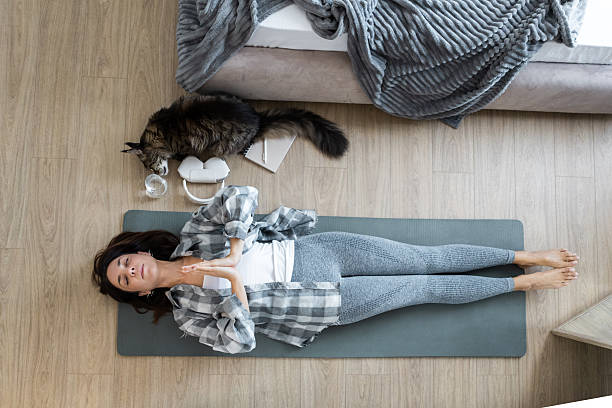
Progressive muscle relaxation is based on a simple idea: clench a muscle, then let it go. The contrast helps you notice what relaxed feels like.
It's especially useful if you hold stress in your jaw, shoulders, or hands. A full session covers many muscle groups and takes about fifteen minutes. For evenings, focusing on jaw, shoulders, hands, and legs is often enough.
Sitting or standing, slowly roll shoulders backward five times, then forward five times. Gently tilt ear toward shoulder on each side, holding for fifteen seconds. Avoid forcing the neck into extreme positions — the movement should feel soothing, not sharp.
Sit on the edge of the bed, feet flat on the floor. Hinge forward from the hips, letting your arms hang toward the floor. Hold for thirty seconds while breathing slowly. This releases the lower back and hamstrings, which often tighten after sitting at a desk.
Lie on your back with legs extended up a wall, forming an L-shape. Stay for five to ten minutes. This gentle inversion helps blood flow return from the legs and can reduce the heavy-leg feeling many people experience in the evening.
Pick one or two stretches and combine them with a body scan if you like. Some evenings you'll only manage five minutes — and that's still worth doing.
It's easier to relax in a space that feels good. A cool room — around 16–19 °C — suits many people, though in Christchurch's changeable weather you might want an extra blanket even in summer.
Natural fabrics like cotton and linen feel nice against the skin. Clearing clutter from your bedside can quiet the mind too. If you use a scent, keep it mild — strong smells can be distracting rather than calming.
Small changes often matter more than adding new techniques: a supportive pillow, a clear floor for stretching, and dim enough light to avoid squinting.